White paper: How driving behavior data can improve marketing
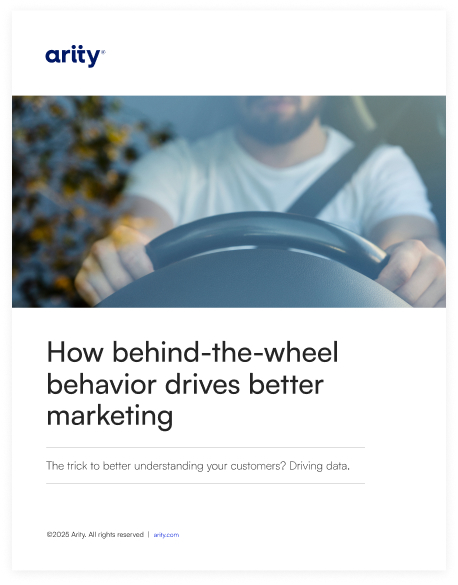
What's the trick to better understanding your customers? Driving behavior data.
Insights into how, when and where consumers drive can help marketers in multiple industries identify better strategies to reach prospective customers. In this white paper, we’ll take a closer look at how five industries are leveraging insights on driver behavior to take drivers from Point A (the road) to Point B (their business).
- Traditional marketing data explains who customers are, but not how they move. Demographics and online search behavior provide important context, but they miss a critical dimension of real‑world behavior.
- Driving behavior data reveals how, when, and where people actually move through the physical world, which shapes intent long before conversion. Driving behavior data adds a powerful behavioral layer to marketing strategy.
- Insights into routes, routines, mileage, and behind‑the‑wheel behavior give marketers a more accurate understanding of customer context than interest‑ or foot traffic‑based signals alone. This enables more relevant planning, targeting, and messaging.
- Mobility patterns influence purchasing decisions across industries. The white paper shows how five industries, including auto insurance, retail and QSR, auto aftermarket, auto parts and repair, and fuel and convenience, use driving behavior insights to better align marketing with when customers are most likely to act.
- Driving behavior‑based audiences outperform assumption‑based targeting. By segmenting customers based on how they drive and move, rather than who they are demographically, marketers can improve reach quality, reduce wasted spend, and focus investments on higher‑value customers.
- Driving behavior signals support full‑funnel marketing decisions. The insights go beyond activation. Marketers can use driving behavior data to inform planning, audience strategy, acquisition efficiency, and long‑term customer value, not just ad placement or message delivery.
- Real‑world movement bridges the gap between digital and physical experiences. Driving data helps marketers connect online exposure to offline behavior, offering a clearer view of how digital campaigns translate into real‑world actions like store visits, service usage, or brand engagement.
- The competitive advantage comes from combining datasets, not replacing them. The paper reinforces that driving behavior data works best when it complements existing demographic, transaction, and media data, creating a more complete and actionable view of the customer.